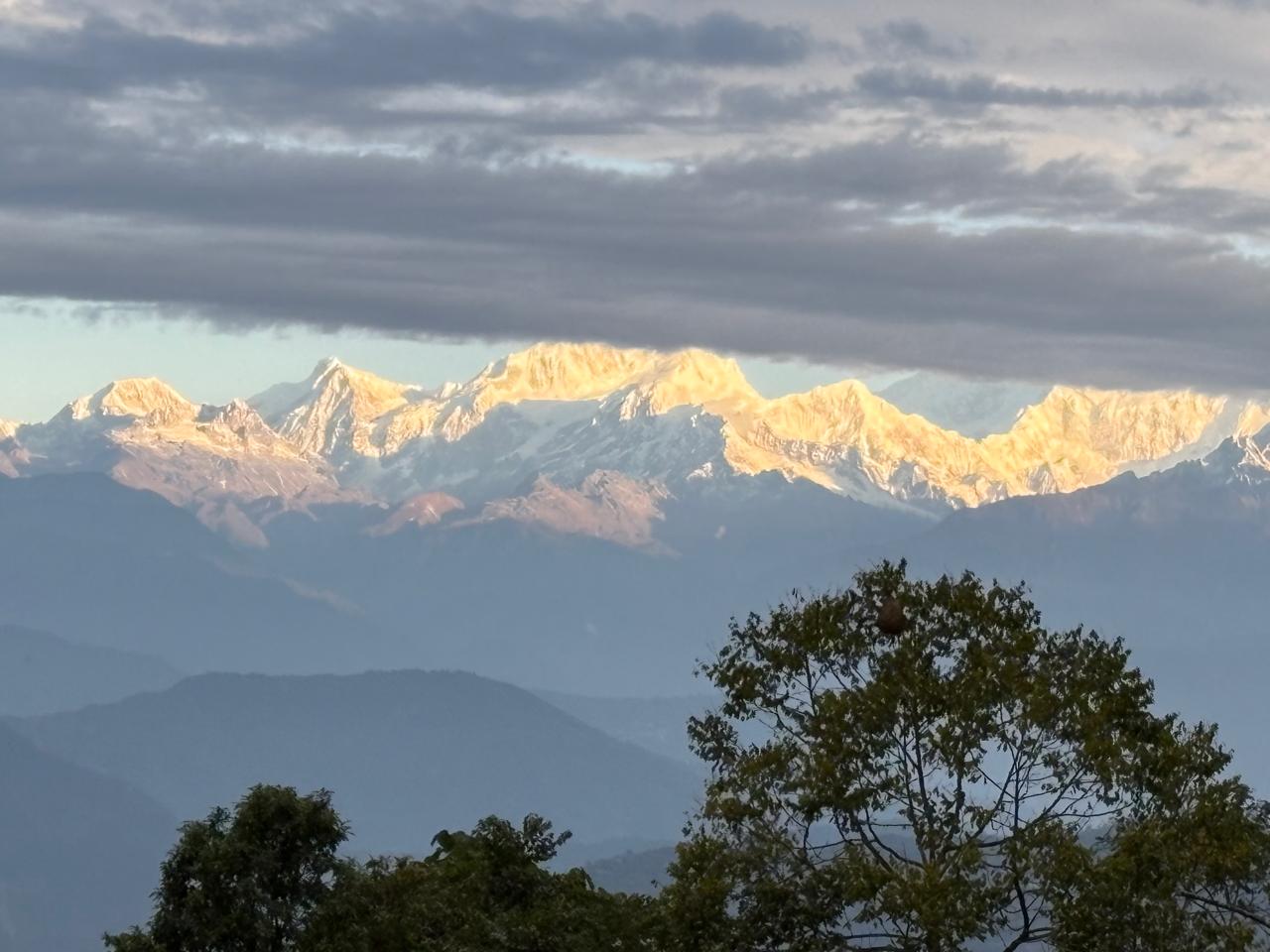
September to November is the best window — the air is clearest and Kanchenjunga is visible through most of the day on most days, not just at dawn. December stays excellent and cold. March to May is mild, green and flowering, and busier. June to September is monsoon: intensely green, very quiet, cheapest — and the mountain still appears on clear mornings around 6–7am. January and February are cold and empty, which is either the problem or the point.
Month by month
| Month | Weather | Kanchenjunga odds | Crowds | Notes |
|---|---|---|---|---|
| January | Cold, crisp, occasional frost | Good | Very low | Quietest month. Deep winter quiet, bring serious layers |
| February | Cold, clearing | Good | Low | Winter easing, still very quiet |
| March | Mild, pleasant | Good | Rising | Rhododendron and spring flowers begin |
| April | Excellent | Moderate | High | Peak spring season, book well ahead |
| May | Warm days, cool nights | Moderate | High | Summer holiday crowds, pre-monsoon haze builds |
| June | Monsoon begins | Early morning only | Falling | Rain sets in, hills turn green |
| July | Heavy rain | Early morning only | Very low | Wettest. Beautiful, misty, occasional road delays |
| August | Heavy rain | Early morning only | Very low | Same. Cheapest time to be here |
| September | Rain easing | Excellent | Low | Air clears fast. Underrated month |
| October | Excellent, clear | Excellent | High | Post-monsoon clarity at its best |
| November | Excellent, cold nights | Excellent | Moderate | Clear, comfortable, orange season nearby |
| December | Cold, dry, clear | Very good | Moderate | Superb views, very cold mornings |
If you're coming for the mountain
What we actually see from the village, across a full year:
- September to November is the season. On most days in these months Kanchenjunga is visible at any time of day, not only at dawn. The post-monsoon air is at its cleanest and the range simply sits there across the horizon.
- December is still very good, with cold, dry, clear mornings.
- Monsoon (June–September) is not a write-off. On mornings when the sky is clear, the mountain shows around 6 or 7am before cloud builds for the day. Be up early and you'll be rewarded more often than you'd expect.
- Spring (March–May) is beautiful but hazier — views come and go.
- Give yourself three mornings whatever the season. One night is a coin toss; three makes a clear view very likely.
The short version: come in autumn and you'll see it all day. Come in monsoon and set an alarm for six.
If you're coming for flowers and green
March to May for rhododendron, magnolia and spring flowering; the eco park's terraced gardens are at their best. Monsoon is when the whole valley turns an almost unreasonable green — the least photogenic for mountains and the most for everything else.
If you're coming for quiet and low rates
January, February, July and August. The village empties, rates soften, and you'll often have the trails to yourself. Winter is cold but dry and clear; monsoon is mild but wet. Pick your trade-off.
If you're coming to work remotely
September to December is easiest. Monsoon is the best value for a long stay if you're flexible about weather — and we have power backup and Wi-Fi year-round. See our workation guide.
What to pack, by season
| Season | Bring |
|---|---|
| Winter (Dec–Feb) | Heavy jacket, thermals, woollen cap, gloves. Mornings are genuinely cold |
| Spring (Mar–May) | Layers, light jacket for evenings, sunscreen |
| Monsoon (Jun–Sep) | Umbrella and rain jacket, shoes with grip, quick-dry clothes, power bank |
| Autumn (Oct–Nov) | Layers plus one warm jacket for mornings — the classic packing month |
All year round: shoes with proper grip. The paths stay damp even in dry months.
Festivals worth timing a trip around
The hill calendar runs on Dashain and Tihar (October–November), and Losar, the Tibetan and Sherpa new year (February–March). Villages are decorated, food is better than usual, and the atmosphere is worth experiencing — though transport gets busy and homestays fill early. If you want to be here for one of these, book well in advance.